
Human Emergence and Our Place in the Natural World
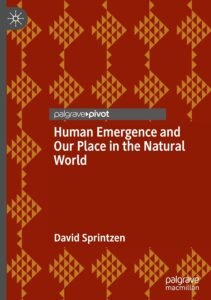
Description
This book challenges the prevailing, though often unacknowledged, view among most practicing scientists and philosophers that human free will is incompatible with the natural causality that is the basic presupposition of modern science. That position is essentially based on the reductionist view of modern physics that all complex phenomena are thought to be ultimately causally explainable solely as a function of the action of their elemental constituents.
The book argues that this mainstream opinion is the appropriate logical result of an inadequate conception of the way nature works. To show this the book first details the fundamental philosophical incoherence in the prevailing scientific world view. It then justifies the critique by outlining and re-describing some key findings of modern science, and presents three related alternative aspects by which we can understand the occurrence of natural emergence. In so doing it is suggested that emergence is a pervasive phenomenon in the natural world, and that human free will is an entirely understandable development of these natural processes, when properly understood, in which humanity is appropriately seen as a natural emergent within the evolutionary processes operating in accord with natural selection.
Human Emergence and Our Place in the Natural World is essential reading for all philosophers of metaphysics and of science.
Chapter 1: What’s Wrong With This Picture?
Like other things one does not talk about, unclear thinking about what is fundamental can come back to haunt us later on. Its most insidious effect is to lead us out into the desert by inducing us to search on smaller and smaller scales for meaning that is not there. (Laughlin, 20)
You think because you understand one you must understand two, because one and one makes two. But you must also understand and. (Ancient Sufi teaching)
Of Science
At the heart of our prevailing scientific world view resides an apparently unresolved theoretical paradox. It makes it practically impossible to develop coherent social programs, while threatening to rob our life of its significance. We believe that most of the time we have a say in what we do and when we do it, and that we are generally responsible for the choices we make and the life we live. In short, to some extent what we make of our life is up to us. Yet, to the extent that we have given any deep thought to our life, we know we live in a world increasingly explained by a scientific perspective that when fully developed seems to leave no place for human free choice. Rather, modern science apparently presents us with an astoundingly successful theoretical and practical edifice that almost all of its sophisticated practitioners believe to be rooted in a natural world entirely explainable as composed of physical phenomena operating in accord with causal determinism. This is true for all aspects of our life, even if that determinism must now be modified at the subatomic level to account for the statistical nature of the quantum world. And yet, we all continue to live our lives, scientists included, as if we are free to choose what we do, when we do it, and for what reasons, thus earning praise for our successes and blame for our failures.
Before proceeding, and lest one thinks I am making this up, let me briefly provide some evidence to substantiate my claim about the prevailing world view of current natural science. I say this is the prevailing view well aware that many practicing scientists do not express themselves quite so explicitly on this issue. But I think it is clearly the taken for granted implicit theoretical assumption underlying their work. Listen, for example, to distinguished string theorist and well-known popularizer of physics, Professor Brian Greene: “We need to recognize that although the sensation of free will is real, the capacity to exert free will – the capacity for the human mind to transcend the laws that control physical progression – is not. … Our choices are the result of our particles coursing one way or another through our brains,” the conclusion being, as summarized by James Gleick, “We do not and cannot cause anything; we are caused.” (Gleick, 27) The world famous outstanding physicist Stephen Hawking expressed precisely the prevalent reductionist determinism thus, “Biological processes are governed by the laws of physics and chemistry and therefore are as determined as the orbits of the planets. …we are no more than biological machines and … free will is just an illusion.” (Mitchell, 13)
As summarized by Kevin Mitchell, “Brian Greene and Stephen Hawking assert that the workings of our brains are as determined as the orbits of the planets. The laws of physics dictate the interactions of all the particles in our brains, as in any other piece of matter. … Such a view is the ultimate expression of reductionism. The philosophy that has tacitly held sway in biology for centuries.” In the words of neuroscientist Patrick Haggard, “There are physical laws, which the electrical and chemical events in the brain obey.” Thus, “as a neuroscientist, you’ve got to be a determinist. … Under identical circumstances, you couldn’t have done otherwise; there’s no ‘I want to do otherwise.’” (Mitchell, x, 15)
Kevin Mitchell sums up this reductive determinism, commenting on the views of noted physicist Sean Carroll: “We can productively do chemistry or biology or psychology with theories that remain at those higher levels. But Carroll maintains that the real truth – the whole truth – resides at the lowest level, with the fundamental physical interactions of the smallest particles. If you had a complete accounting of what is going on down there, then you would not need any other information to fully predict what the system will do: everything happening at the higher levels simply derives or emerges from the low-level dynamics.” (Mitchell, 15)
Quite recently, distinguished neuroscientist and MacArthur award winner, Dr. Robert Sapolsky devoted more than 400 pages to precisely this argument in his book, Determined: A Science of Life Without Free Will, asserting that, “we are nothing more or less than the cumulative biological and environmental luck, over which we had no control.” In perfect modern Spinozistic fashion, the world is claimed to be one unbroken system of causal necessity. (Sapolsky, 4) As Mitchell comments on the thought of noted philosopher Daniel Dennett, “… determinism still holds. … no real choice exists, … you could not, at any given moment, ‘have done otherwise.’ This compatibility view of free will is widespread among philosophers and scientists, …” (Mitchell, ix-x)
If that pervasive scientific world view is correct, however, our ordinary taken for granted capacity to freely choose what we do makes no sense. It is, as some philosophers say, nothing but “folk psychology,” a remnant of a primitive way of thinking. This folk psychological perspective is just one of many attempts of philosophers to seek to accord our normal human experience with their scientifically-based understanding of the requirements of a fundamentally material reductionist view of natural science.
Some even go so far as to claim that there is really no such thing as beliefs and desires. Certainly there cannot be freely operative human purposes. Rather, their claim is that an advancing science will ultimately replace this outdated “folk psychology” by an empirically established and comprehensive neurophysiology. So it would seem that we are all living an illusion. But how then can even the scientists really choose to do what they are doing and for the reasons they believe they are doing it?
Of Religion
If you find this scientific world view perplexing, to say the least, however, you cannot turn to the world’s religions to find a more coherent and constructive alternative guide to human living. We know, of course, that most people in the world are religious. That usually means they believe in one or several transcendent divine beings or gods who are the source of, and/or the creative force sustaining, the world. They are thus committed to an idealist metaphysics in which the material world is essentially derivative of the spiritual power of the divine, itself often seen as having created the world. Physical reality and natural causality are, therefore, either directly or indirectly, expressions of the divine will. It is god or the gods who have created the world, and determined how it operates. How then do they account for the existence and causal regularity of universal natural laws, and the consequent practical efficacy of scientifically based technology?
They can, of course, claim that such laws are simply the result of “God’s design,” and similarly with all other processes of the world of our experience. But this is a far from convincing answer, as it ultimately reduces all questions of causality simply to assertions grounded in an act of unreasoned faith in the will of an inexplicable transcendent being. It certainly provides no agreed upon way of either resolving conflicting interpretations of “God’s design” – as evidenced by the extensive conflicting interpretations among the world’s religions – or of using that divine design to guide practical research, social action, and policy. It claims to explain the evident physical events of our natural and practical experience by the spiritual action of an essentially incomprehensible and entirely invisible supernatural force, whose nature and apparently willful behavior entirely surpasses our understanding.
Beyond those difficult theoretical issues are still further profound theoretical and moral challenges to religious beliefs. So far as people believe their “divine being(s)” is all good, they are obviously caught in the dilemma of trying to explain the existence of evil and unjust suffering; and to the extent to which they believe their divine being(s) is all-powerful and all-knowing, they are incapable of making coherent sense of any belief in human free will or moral responsibility. At the same time, most religious people believe in the human being’s freedom of thought and action, upon which their moral values, social programs, and legal systems are based, without being able to explain how such freedom can be possible without seriously compromising god’s power and/or foreknowledge. At their philosophical best, they are reduced to a quite unsatisfactory, and essentially incoherent, compatibilism, claiming that human moral responsibility and divine omnipotence are inexplicably compatible, in a manner somewhat similar to that of many modern philosophers, of which more later.
Thus most religions operate on a daily basis as incoherent practical dualists. But, of course, such dualism makes no causal theoretical sense. For example, no one has ever come up with a coherent and convincing explanation as to how those two distinct realms of spirit and body, or mind and matter, could effectively interact. (In a lecture on cognitive science, John Searle reports being surprised to hear the Dalai Lama present a Buddhist view of the world that was straight Cartesian dualism – without, of course, any reference to Descartes himself.)
Finally, the world’s religions operate daily in a material world influenced and increasingly directed by an increasingly effective natural science, thus drawing daily upon technology and medicine whose operation is essentially at odds with their religious beliefs about what is fundamentally real. Thus, while living daily as metaphysical dualists – Christianity, Judaism, Islam, Hinduism, and (to a major extent) Buddhism, among others – they theologically ground that dualism in a quite dubious metaphysical idealism that is at odds with the practical realities of daily life in the natural world.
It is, further, quite clear that the world’s institutional, economic, political, military, and scientific activities are increasingly guided by a scientific/technical world view that is apparently materialist and reductionist, thus effectively denying personal choice, moral responsibility, and human freedom to all. And that in spite of the fact that the world’s legal systems and moral codes are based on the assumption of precisely such responsible personal choice. What sense can we make of this situation?
The first thing to underscore here, however, to summarize all of the above, is that human behavior is apparently purposeful, while objective nature, for all intents and purposes, operates with regularity in accordance with determinative laws. Certainly in the immediate post-Newtonian world, the mechanical clock was often seen as the model for physical interactions, as, for example, with the complete explanation of the movement of the planets. In explaining then how the world works, noted philosopher David Hume had recourse to the example of interacting billiard balls, with their resultant behavior being a completely determinable consequence of their inertial mass and momentum, modified only by the resistance of the medium. Although the quantum world has certainly introduced a significant element of probability into the prevailing world view of natural science, it has apparently not essentially affected the prevailing material reductionist perspective.
We thus find the world conceptually divided either between two completely incompatible metaphysical orientations – materialism or idealism – each of which is essentially monistic and reductive, or by a completely implausible dualistic composite. The vast majority of the world’s peoples, while practicing dualists, actually believe in a religio-idealist interpretation that is fundamentally inconsistent with the scientific world view that provides the foundation for the technological developments by which we all increasingly live our daily lives. But it is this very spiritualistic approach that grounds the world’s ethical systems, and sustains human beings’ sense of the meaning and dignity of their lives and the possibilities of their having some effective control over their daily life. How can we square this circle? And resolve this morally and theoretically untenable situation?
Historically, there can be no doubt about the experimental and technical success of both the Newtonian and the Relativity and Quantum systems, from industrial developments to war, space exploration, biological engineering, and artificial intelligence. Yet it is human beings that developed those theories and implemented their technical applications in accordance with thought processes that clearly do not seem to follow any such deterministic processes. It has, for example, never been clear how the Newtonian system could account for the purposeful scientific investigations of Isaac Newton himself. He certainly did not see his theories as providing completely adequate explanations of the natural order. The best he could do, at least publicly, was to “beg off” of any adequate theoretical explanation by saying “I do not feign hypotheses.” Meanwhile, quietly, he explored numerous versions of astrology and Biblical chronology, while even speculating on the possibility that space itself was God’s “sensorium.”
Obviously, then, there have long been, and remain, serious incompatibilities between our prevailing world views, whether scientific or religious, while “…free will …[remains] a uniquely vexing problem. … [Even more, it] seems inherently at odds with what we know about how everything works in the universe, … and [therefore,]… we may need to question the philosophical bedrock of our scientific approach if we are to reconcile the clear existence of choice with the apparent determinism of the physical universe.” (Mitchell, 16-18)
Phenomenology of Daily Life
Clearly, every day ordinary human beings seem to make free choices, entertaining the capacity to think, weigh alternatives, and even experience anxiety about the possible consequences of these alternatives. Jean-Paul Sartre well captured the pervasive actually experienced duality in human daily experience — between our apparent free will and the causal determinism of the natural world — with his phenomenologically descriptive categories of the “For Itself” and the “In Itself,” by which he divided up the experience of what is. In updating the Cartesian dualism of thinking substance and extended substance, Sartre clearly eschewed any attempt to account for the origin of these two distinctive experiential modes of being, simply asserting that we find these two opposed and irreducible qualities in experience. The task of his “phenomenological ontology” was to describe extensively and in detail their modes of operation. In describing these modes of being, he noted that the In-Itself apparently followed deterministic laws, being completely predictable, while the For-Itself was essentially defined as a self-conscious freedom for whom the world appeared as a field of as yet undetermined future possibilities. Such consciousness was not defined or completely determined by its past, but rather by the not yet existent future. In his provocative mode of expression, Sartre defined the being of the human self as “to be what it is not, and not to be what it is,” meaning that it is up to each of us to make something of ourselves out of what others have sought to make of us. In short, ontologically as consciousnesses, we are condemned to be free, and thus fundamentally responsible for our actions.
Of course, at one level, Sartre is quite right. That is the way our experience appears to us. And that appearance needs to be accounted for. But does that appearance ultimately make theoretical sense as an adequate foundation? While traditional dualism has never been able to explain the manner of interaction between the fundamentally opposed substances of thought and extension (that is, mind and body), Sartrean thought seeks to avoid that problem with its non-causal approach, thus also eschewing any investigation into the knotty problem of the origin of this dualism, and hence the ground of that conscious freedom. Meanwhile, it still fails to deal with the original dilemma by fudging the question of the relation of the free conscious subject to the body that seems to be its material precondition. It thus leaves its freedom dangling in thin air, a metaphysical surd without roots or a home in the universe. Perhaps this is an historically appropriate expression of a culture whose pre-industrial roots have been torn asunder by industrial development and the world market, but it is hardly a philosophically adequate theory of being.
If, on the other hand, we take seriously the astounding development of human technical and theoretical capacity that constitutes effective proof of the power and essential validity of modern science, we must come to terms directly with its operative reductive materialist perspective. Either we need to accept it, and then show how thought can be entirely reduced to the terms of a materialist natural science, or, since dualism won’t do, we need to provide an alternative framework that makes sense of thought as an emergent property of nature. The challenge of this work will be to show why the prevalent materialist reduction is inadequate (and, I claim, ultimately incoherent), while the doctrine of emergence not only can do justice to the objective facts, but also provides a means for coherently addressing the problem of freedom, and its relation to determinism. For, as Roy Bhaskar suggestively observes, “… it is only a non-reductionist metaphysics that can bring itself within its own world view.” (Bhaskar, 130) But how plausible is such an alternative metaphysics? What might it look like, and what solutions might it offer? It is those issues that I seek to address in this work.
Works Cited
Bhaskar, Roy, 1986, Scientific Realism and Human Emancipation, London: Verso. (Bhaskar)
Gleick, James, 2024, “The Fate of Free Will,” New York Review of Books, Vol LXXI, No. 1, New York. (Gleick)
Laughlin, Robert B., 2005, A Different Universe: Reinventing Physics from the Bottom Down, New York: Basic Books. (Laughlin)
Mitchell, Kevin J., 2023, Free Agents: How Evolution Gave Us Free Will, Princeton, New Jersey: Princeton University Press. (Mitchell)
Sapolsky, Robert M., 2023, Determined: A Science of Life Without Free Will, New York: Penguin Press. (Sapolsky)
End Notes